Final reflection

The science and employability module has included many different subject areas, and has better prepared me for my future career path.

 Before the start of the year I was unsure on what I wanted to do once I had graduated from university. However I now have a better understanding of what I want to do. I will be taking a year to improve my CV through volunteering work and hopefully travel to do this volunteer work.

 I have found the module very informative. Whether this be from the detailed and vital information given on CV writing and interview practice, or the concepts of business that are used in all areas in life.

Seminars  

The seminars that I have been to this year have expanded my knowledge on different areas of study in the bioscience community.

They have also opened my eyes to the new discoveries and exciting results found everyday by scientists. The topics have widened my interests and reminded me of the importance of conservational efforts in order to save many species on this planet form extinction.

However, conservation wasn’t the only topic I learned about during these seminars. I also learned a lot about early human evolution as well as ice sheets in Britain and Ireland. As my interests are varies I made sure I went to seminars in a variety of different fields.

The talks I enjoyed the most were the seminars on illegal wildlife trade and primatology and human evolution by Stuart Marsden and Susana Carvalho respectively. This was because both of the seminars changed my viewpoint on the matter.

Before I had only ever thought of animal exploitation as negatively impacting the animals in ecosystem and the primatology seminar opened me up to new ideas in early human evolution.

The seminars allowed me to explore my options when considering future job options and make me feel as though a career in scientific research could be an option for me.

The lectures

The lectures presented by Clare Brass were useful in summarising core advice when preparing for an interview and writing a CV.

As now feel as though I can write a comprehensive CV with appropriate language style. I also feel as though my CV will now be well structured and contain all the elements needed for a good CV.

I have had mock interview practice before, however I had always been unconfident with my approach and delivery when in an interview.

With the help of the STAR technique (Situation, Task, Action and Result) of answering interview questions I now feel as though I can answer any interview question with confidence.

The lectures presented by Chris were also useful as many companies in all different kind of fields include aspects of business concepts.

 I think a basic understanding of business terms and concepts is important and would be desirable for many employers.

The workshops

I found the first workshop lead by Clare to be valuable as I have never had any experiences with an assessment centre.

The workshop was well organised and although the most important aspects of an assessment centre was included throughout the day, group activity and interview practice, it would have been nice if other aspects of the assessment centre had been included too. For example the presentations.

Receiving feedback from peers in my group was also valuable as they were marking me based on whether my answer followed the STAR format.

It was also helpful to watch people in my group give interview answers as when giving feedback on their performance you can also learn.

The Dragons Den event was a completely new experience as I had little to no understanding of business planning before the event.

However I did find it useful regarding learning the simple format of a business plan.

Although useful in learning basic business terms, I probably enjoyed this event the least as I was out of my depth in terms of knowledge. I also have no intention of setting up a business in the future as part of my career path.

The blogs  

I have enjoyed writing these blogs as it has allowed me to explore scientific concepts in a new way and has also allowed me to write about a variety of ideas in various subject areas that I’m interested in.

A blog is a form of writing that I have never used before, so it is interesting to be sharing thoughts and ideas on different scientific fields in a different form. The more casual format is a massive difference compared to a scientific report for example.

Using word press has been easier than I originally though and I would definitely use the website to create a blog again.

Final thoughts    

Overall I have found this module very insightful into the different ways scientific thoughts and ideas can be expressed.

The seminars I have attended of studies held by leading professionals in the field has also really inspired me to pursue a career in scientific research.  

The module was very enjoyable ad well organised. I enjoyed the alternative format for showing my thoughts and ideas and would definitely recommend any other bioscience undergraduate students to take this course and attend some of the seminars.    
Dragons den workshop

The second workshop was held by Chris Walker. The aim of this workshop was to create a business plan for a bio science related business.

The study of business is very important in most career pathways and is implemented in nearly every subject area.

We had to create a business plan from scratch and record a promotional video of the product or services provided. We then had to present our idea to the group.

Business model canvas

Business plan 

It took our group a long time to come with an idea for our business. However in the end we settled on the sarcastic and satirical idea of a pyramid scheme. The company was Green schemes LTD and we sold green tea and weight loss pills that included all organic substances.

We used the headline ‘it’s not a pyramid, it’s a tower where everyone makes money!’

A small number of sellers would be chosen to begin with to sell the herbal tea from door to door. Friends and family would be recruited to begin with until the company expands.

The video

A crowd-funder video was created where we promoted our business Green Schemes LTD.

The video focused on how you can make easy money fast by becoming a seller of green schemes products.

Thoughts and opinions

I thought this workshop was a success overall. The workshop helped us learn about some basic business concepts.

As many areas of work use business terms and concepts in the work environment I though this workshop was very useful in helping us to use these concepts.   

Writing a business plan and entrepreneurship

Writing a business plan and entrepreneurship

Business model

The second set of science and employability skills lectures were held by Chris Walker.  In the lectures he discussed making a business model or plan and entrepreneurship.

When creating a business plan it is important that the product or service being sold is valued by the consumers.

It is also important to consider which area of biological sciences you are interested in when thinking of a business associated with biology.

It is vital that any concerns are thought of about the area of study and the product is actually beneficial to the environment as well as wanted by the customer

When creating a business model you can innovate in three areas:

  • Products
  • Services
  • Business model

There are also three types of innovation:

  • Iterative- Small changes to an existing product, service or business model
  • Radical- Big changes to an existing product, service or business model
  • Disruptive- Game changers – huge changes to an existing product, service or business model

UESTCA

Using examples that have a Biology base/ climate change etc, thnk of:

  • User – who
  • Environment- where
  • Scenarios- what is happening
  • Technology- what technology is involved
  • Competition-  who else is operating in this arena
  • Aesthetics-  how is it livening up the senses

Assessment

Business plan must be set using the Simply Do online Concept Canvas format:

  • Concepts
  • Customers
  • Competitors
  • Contents
  • Compatibility
  • Cash- in and out
  • Cash flow forecast

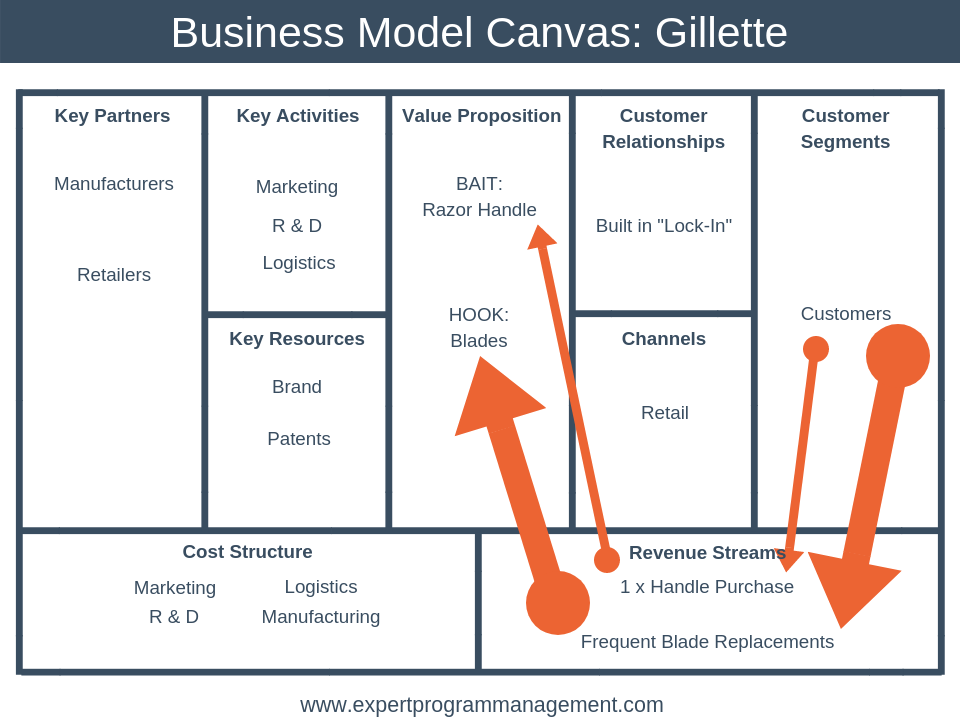
A business model describes the rationale of how an organisation creates, delivers and captures value.

Value propositions

  • “Bundle” of products and/or services that create value for a Customer Segment.
  • Reason why customers choose one company over another – solves a problem or satisfies a need.
  • Can be quantitative (price, speed) or qualitative (design, customer service).

Customer Relationships

  • Types of relationships a company establishes with specific Customer Segments.
  • Range from “personal” to “automated” – company should clarify this.
  • May be driven by customer acquisition, customer retention or boosting sales.

Revenue Streams

  • The cash a company generates from each Customer Segment.
  • Each Revenue Stream may have different pricing mechanisms, e.g. fixed list prices, bargaining or auctioning.
  • Business Model can involve two different types of Revenue Streams – Transaction (one-time) and Recurring.

Assessment centre

This workshop was designed to prepare and explain to us the format and kind of activities that occur on an assessment day.

The assessment day comprised of numerous group activities and often ends with the people applying for the job giving presentation.

Competency tests are also common at an assessment day as well as well as further interviews.

The workshop comprised on two half’s, for the first half we were put into groups and assigned a task and for the second half of the day we tool it in turns to be the candidate and part of the panel for interviews

The egg group work

Our challenge was to create a mechanism that would prevent the egg from breaking when dropped from the balcony. We had limited time and could only use items provided

Items given to us included straws, string etc.

Our group worked well with many of us coming up with good ideas, the struggle was deciding on a method and completing the task within the time limit.

Unfortunately our efforts didn’t pay off and the egg broke.

I think this is due to lack of time even though our group had good communication and delegation skills.   

Mock interview

The afternoon session consisted of the group taking it in turns to have five minute mock interviews.

Everyone also took it in turns to be part of the interview panel whether that be the time keeper or the interviewer etc.

A feedback sheet was filled out for the candidate and the panel would then present their observations.

In the interview three question were asked at random.

Individual thoughts and opinions

The feedback to my answers mentioned that I had a strong answer, however I could answer the questions with more elements of the STAR technique of answering.

I thought the day was informative and represented the format of an assessment day well.

Overall I would rate the day a success and helpful in future assessment day preparation. 

Introducing a snake in North Wales

This seminar was by Tom Major. At the beginning of the talk phenotypic colour changes in chameleons were discussed. An individual was placed into a coloured chamber.

‘Fast fourier’ filtering showed the extent of the colour change in each test subject.

To make the experiment as realistic as possible a model bird’s eye was used so that the predator’s view of the colour change was emulated

The results of this project actually showed no correlation between the two variable, therefore they had to reject their hypothesis.

Introduction of a snake

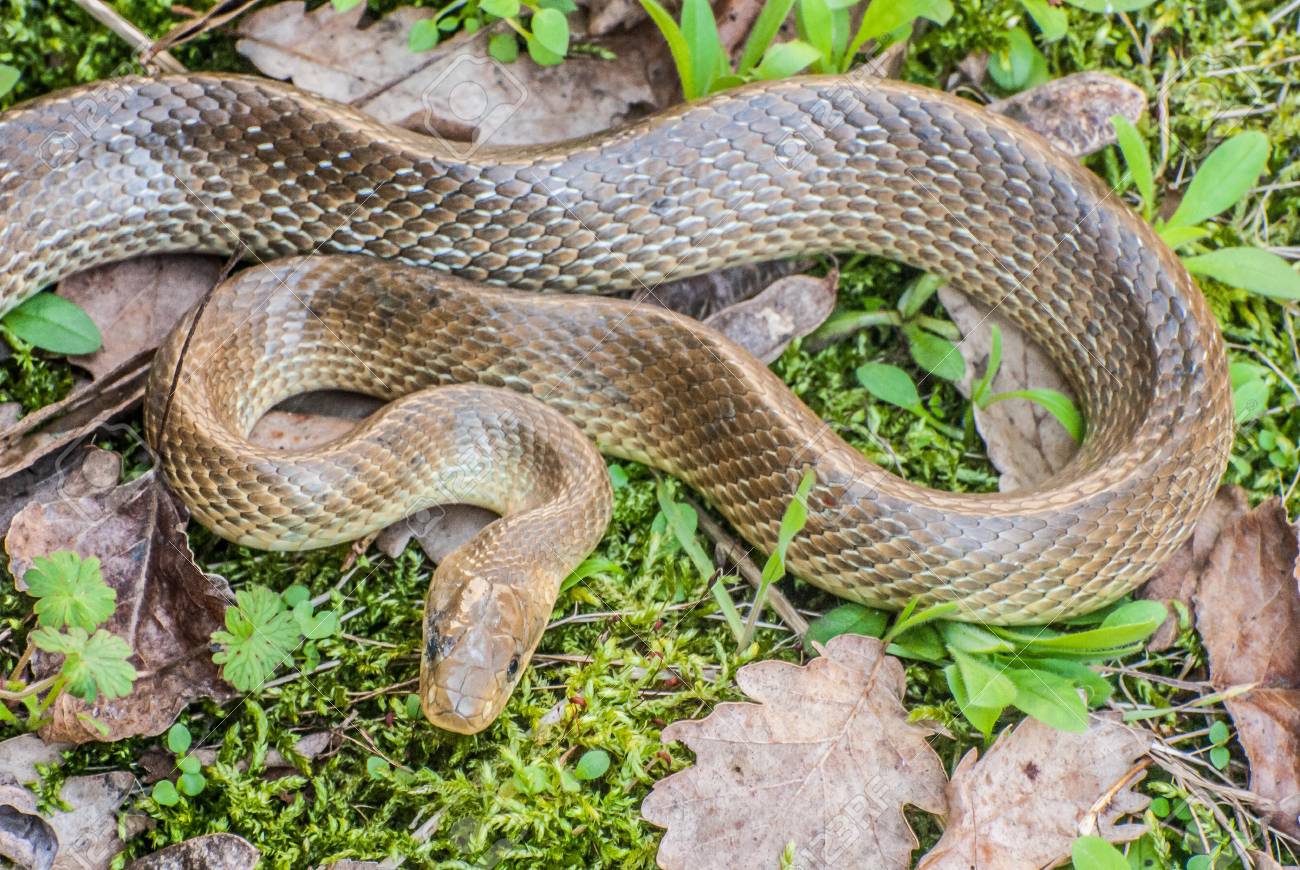
Aesculapian snake

The Aesculapian snake is native to mainland Europe. However the species was reintroduced to London and in Colwyn Bay in the 1960’s and 1980’s respectively.

Toms study surveyed the population of this species and aimed to better understand the population distribution of the snake as well as population numbers.

Faecal analysis was obtained and each individual captured was marked and measured

The aim of the study was also to determine the main habitat types of the snake.

Individual thoughts and opinions

I found this talk interesting as the species in question, although native to mainland Europe, is inhabiting areas of the UK. A lot of conservation work is thought of as work mainly done in foreign countries.

It is exciting to hear about conservational work being done in the UK.

As this species is to native to the UK it is important to discover whether the population of this species of snake are controlled.

The species could be having an effect on native British species such as the grass snake.  

Primatology and human evolution at the southern end of the rift valley

This seminar was by Susana Carvalho. She discussed tool use in chimpanzees especially

Although there has been much research into human evolution, there is still a lot of bias surrounding the question of where we evolved from. There is a conflict within the scientific community with some saying Africa and some Europe.

Fossil evidence is also often unclear and incomplete, adding to the confusion.

One theory for human evolution claims that we evolved as a result of fragmentation of forests in the Mid-Miocene era.

African Rift Valley

  Located in the Gorongosa national park are many fossils, it is here were some scientists believe this is where human evolution began.

It is an area of great biodiversity and includes many different biomes.

Paleo Primate Project

Baboon

Susana study included her surveying fossils found in the park, the project has numerous study sites where the fossils are normally bones.

Hominid mandibles have been found in the park and the teeth bones have shown that the diet was mainly herbivorous.

Susana and the team on the study believe they have discovered a new species of hominid. And have propose a new hypothesis that bipedal movement evolved as a result of adapting to flooded conditions.

Other aspects of the study included behavioural studied of baboons in the area to understand how bones are distributed after a hunt.

The digestion of bone marrow has also lead to the proposition that this leads to increased brain development.

Individual thoughts and opinions  

I found this seminar very interesting as there were numerous new theories and ideas being proposed. The study opens the gateway into further research in the field and greatly furthers our understanding of early human development.

The seminar also helped answer the age old question of how and where did humans evolve.

Sex, speciation, extinction and Selfish genes

This seminar was by Tom Price and he discussed his study on genes that ‘cheat’. Most genes co-operate.

Meiotic drive

Meiotic drive is when a diploid organism, has gametes with a haploid number of gametes. The meiotic process is changes so that the fitness is increased and the transmission of alleles occur.

In some organisms sperm cells are killed as a result of this meiotic drive in the male species.

Mating systems can be transformed through meiotic drive and can inhibit the distribution of spread.

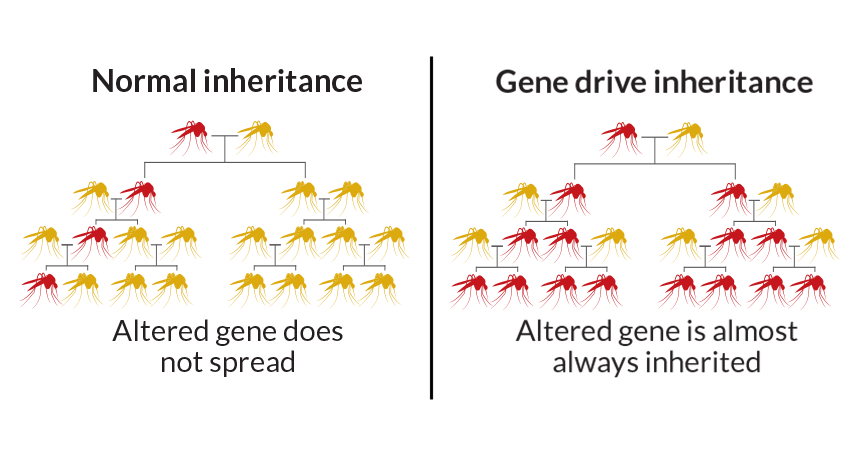
Gene drive inheritance


X-chromosome meiotic drive is when the sex chromosomes eliminate the Y chromosomes, therefore mostly females are produced and less males are produced.

Drosphilia pseudoobscura

Tom discussed his study on this species, and how the females would reproduce with sex ratio males. These males produced much less sperm and so lose in sperm competition.

Females of the species have evolved to prefer polyandry rather than monandry to combat the sex ratio males and avoid population extinction.

Speciation

Speciation is a factor when promoting biodiversity, speciation leads to more species becoming endemic to their area as many of the species in the Seychelles.

Meiotic drive ca cause conflictual speciation where if gene drive is present reproductive divergence occurs as the population becomes sex bias.

Gene drive and disease

Gene drive can be very beneficial in preventing and eventually eradicating diseases such as malaria.

Gene drive can also help eradicate invasive species that are harmful to the native wildlife

If sex bias is produced and only males or only females are produced then the population can be eradicated without the need for culling.

Individual thoughts and opinions

I found this seminar very interesting, the prospect of gene engineering has always interested me. The idea that diseases could be eradicated in such a small space of time is a breakthrough.

 However the dangers of manipulating genes is only just being recognised and more research I definitely needed on the area.

The Last British-Irish Ice Sheet: reconstructing its demise from the terrestrial and seafloor record

This presentation was conducted by Sheffield University Professor of Geoscience Chris Clark.

Extent of the British-Irish Ice Sheet

During the last glacial maximum (LGM), cryospheric systems subsumed the majority of the British Isles. To put the scale into perspective, the volume of ice that covered the British Isles would be enough to raise global sea levels by 2.5 meters.

LGM is agreed to be 21,000 years ago and was a sustained period of relatively low global temperatures, allowing for cryospheric systems and processes to alter the shape of the natural Earth that we know today.

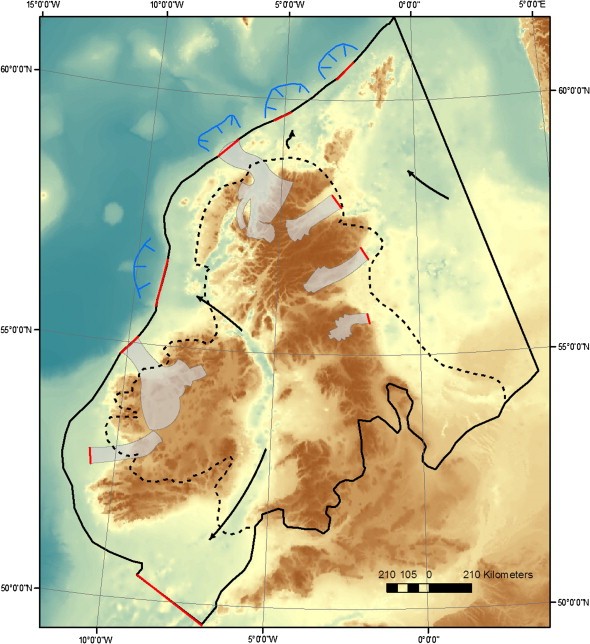
Fig. 1. Two end-member reconstructions of maximum extent of the British-Irish Ice sheet. The smaller (dashed) is the ‘traditional’ view. The larger extent (solid line) includes complete ice cover of Ireland and Scotland and with ice spreading to the continental shelf edge and covering the North Sea.

Chris discussed the many modelling exercises undertaken over the last century that have been used to model the British and Irish Ice Sheet (BIIS). He stated that by nature, historic research has been highly generalised, especially with regard to timings and glacial extent.

Utilising modern methods of technology to map retreat, such as remote sensing data, glacial features were mapped and compiled into a Geographic Information System (GIS).

 Particular features of interest included: moraines (terminal and lateral), drumlins, sub-glacial and lateral meltwater channels and eskers.

Research findings suggested that glacial retreat was incomplete in style allowing for disintegration of the BIIS into component ice caps.

 It also suggested that retreat was not just subjected to higher ground and that the rate of ice loss was slow at the shelf edge, but a much quicker rate of retreat is evident towards modern shorelines.

Individual Thoughts and Opinions

I found the presentation by Chris particularly thought provoking due to the unfamiliar nature of the topic and engaging style in which the audience’s attention was captured. I enjoyed the visual use in which GIS was used to interpret and enhance raw data allowing for comparisons to be drawn and assumptions to be made.

Exploitation of wildlife and the impacts

This was a talk by Stuart Marsden. In the seminar he discussed the impacts of the over exploitation of wildlife. The over exploitation of animals is something that has been going on for years and is in no way a new or recent problem.

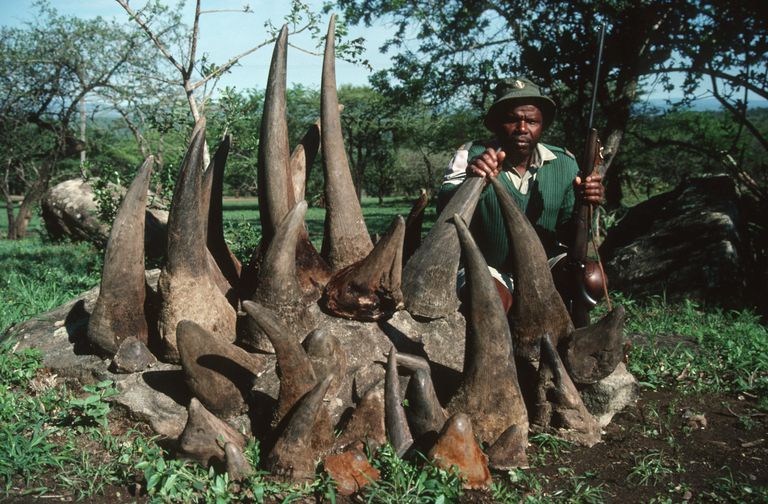
Rhino horns illegally poached

Examples of this include:

  • Hunting
  • Trapping
  • Culling
  • Poaching
  • Harvesting

There are a variety of reactions to all of these form of exploitation. Many believe that hunting animals for sport only has negative impacts.

Whereas other forms of exploitation such as harvesting have less negative impacts on the wildlife.

However there can be some unexpected benefits to the more controversial of these examples. For example the money paid by big game hunters for permits can be used to benefit conservational efforts.

Sustainability

Many believe that the exploitation of animals is acceptable as long as I is done in a sustainable way.

However the problem with a lot of animal exploitation is that the harvest numbers are not available or are not accurate.

When discussing sustainability it is important to determine how the species will react and whether they are an r or a k selected species.

Exploitation of songbirds

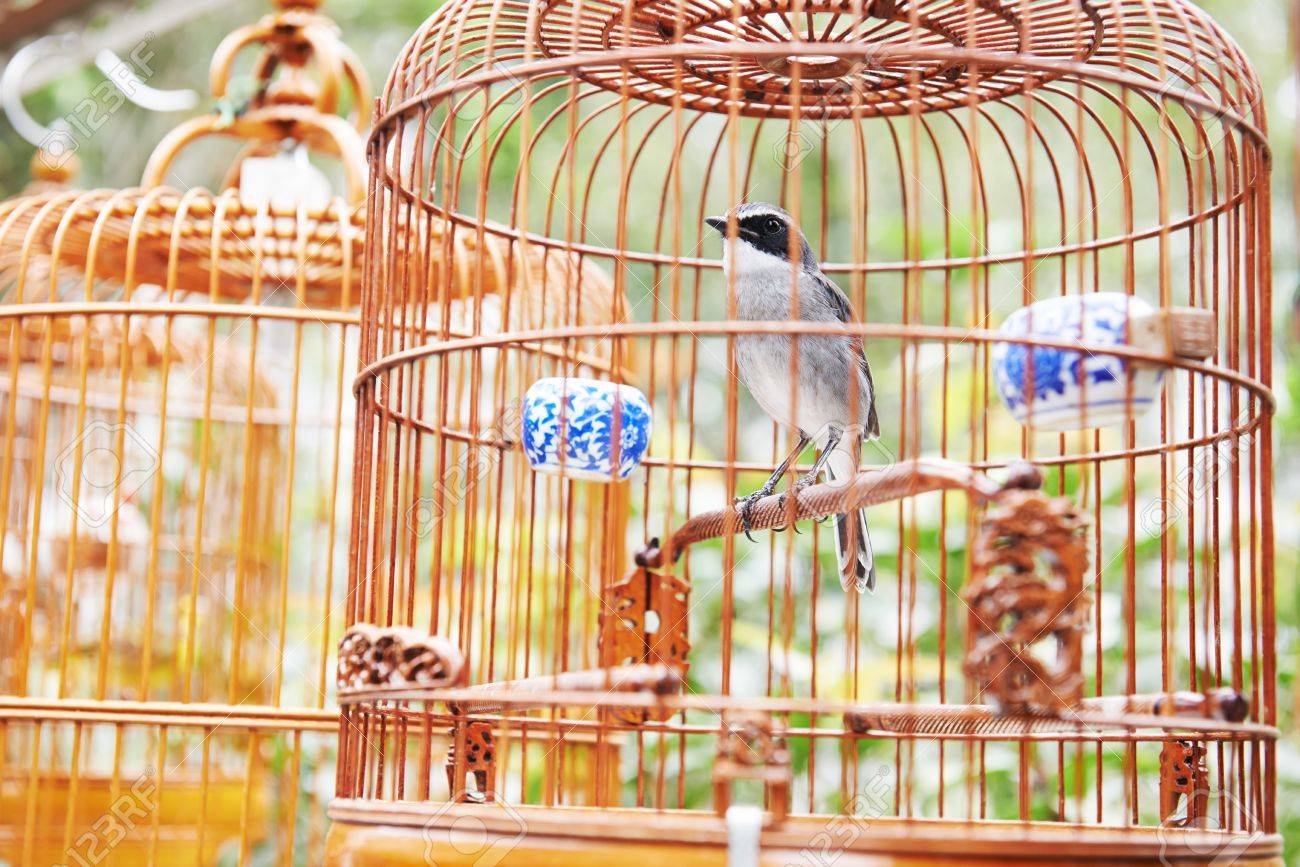
Tradition in countries such as Indonesia mean that masses of songbirds are kept in cages. Their culture states that in order to become a man a boy must own a songbird.

Such enormous numbers are sold that 19 songbird species are now listed as critically endangered.

Stuart is working in Java to reduce the demand for these song birds, educating locals of the threat to the bird’s extinction.

Songbird in cage

Individual thoughts and opinions

I found this seminar very interesting as I always thought of animal exploitation as always negatively impacting wildlife.  It was interesting to hear a realistic view on the need for animal exploitation in order to conserve other species that are more critically endangered.  

Evolution, ecology and ecology, evolution and conservation of Seychelles caecilian amphibians

caecilian with young

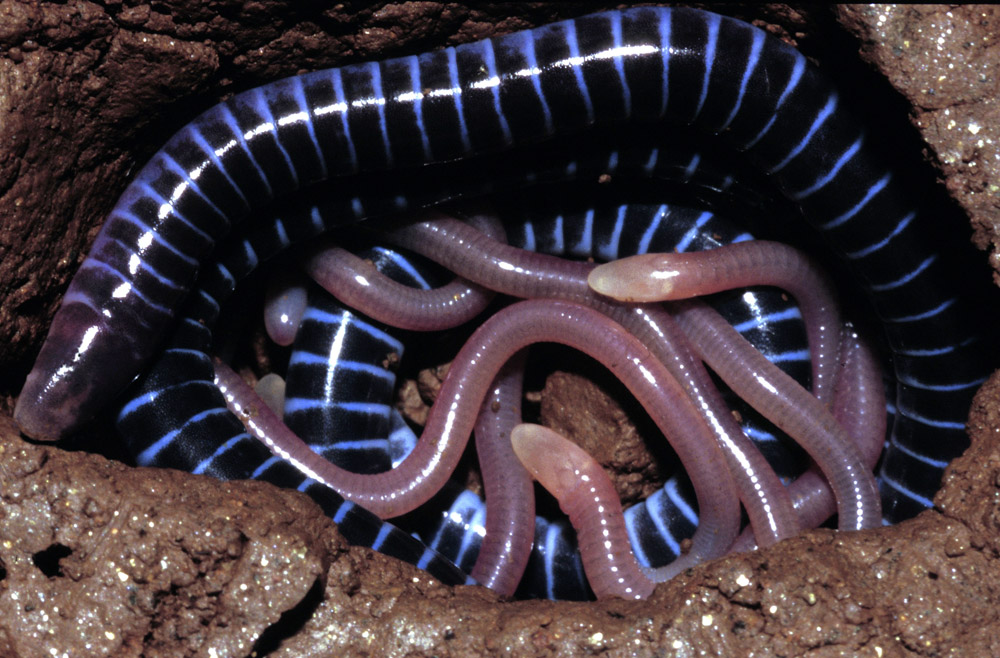
This seminar was by Simon Maddock and focused on the study he had been doing in the Seychelles. These animals are known as ‘naked snakes’ and are a much understudied species.

He began his talk discussing the difficulties when trying to describe and therefore classify the organisms. It is also a struggle to identify new species. This is because of the lack of external features.

They are generally brown and have overlapping scales. Surprisingly have teeth, they have a varied diet but typically they are carnivores

Simon talked about how he surveyed these organisms. The principal way was to dig, however pit fall traps and aquatic traps were also used.

The Seychelles

The Seychelles are a cluster of islands that have been isolated for many years, as a result many of the species that inhabit the islands are endemic to the area.

Generally there aren’t that many studies on caecilians, however as they are abundant in the islands, most of the previous studies have taken place in the Seychelles

Key pressures on Seychelles caecilians include: habitat loss, climate change, pollution and disease, such as the fungal infection chytrid fungi

Although the chytrid fungal diseases has not reached the Seychelles yet, it is likely to infect the islands in the future

New species discovered

Hypogeophis pti

This species is thought be the smallest in the world and is found I the dry plam forests of the islands

Hypogeophis montanus

This species is found in the mountainous habitat of the islands, however they are majorly threatened by climate change as there is no more room for the species to move up the mountain

Conservation

These species are both endangered and are in need of conservation efforts to avoid extinction.

Long term monitoring and education of the locals in conservational efforts for these organisms are taking place

Individual thoughts and opinions  

I found this talk very interesting as it was a field that I knew near to nothing about. To learn more about caecilians and learn about the conservational efforts set in place to protect them is something I am interested in.

The idea that these species could be extinct in the very near future is a very worrying idea.